BMW introduces exclusive M3 Edition models


It's difficult to make the new BMW M3 even more appealing, but that's exactly what the boys from Bavaria are trying to do with the new M3 Edition models. The limited run of 2009 M3s feature a choice of four bespoke paint schemes – Alpine White Non-Metallic, Black Non-Metallic, Dakar Yellow Non-Metallic or Monte Carlo Blue Metallic – along with a black-finished twin kidney grille, fender vents and mirror caps. Body-colored side-mirror bases and darkened chrome quad exhaust tips round out the exterior mods, and things get even more individual inside.
The interior benefits from a center console and armrests finished in white on the Alpine and black models, with "Carbon Structure Leather" trim and black Novillo leather seats, each complimented with white stitching. Vertical white trim adorns the back-rest and leg-rest, while the yellow and blue models get matching interior trimmings, and all Edition models feature both a numbered plaque and checkered flag door sills.
The only "performance" modifications are a suspension dropped by 10mm (0.4-inches) and Edition-specific forged, 19-inch double-spoke wheels, available in either black, brushed metal or – on the white, black and blue models – polished spokes with contrasting white highlights. Sales will begin this July and will only be available for a six month term.
PRESS RELEASE
Supreme Performance, Exclusive Style: The BMW M3 Edition Models.
Powerful, aesthetic design, supreme performance and exclusive style – the unique characteristics of the BMW M3 are now available in highly attractive Edition Models focusing on the most outstanding highlights of these outstanding cars.
Based on the BMW M3 Coupé, the M3 Edition Models offer a choice of no less than four highly individual cars boasting perfectly harmonised modifications in body design and interior features as well as special light-alloy wheels and an even lower chassis.
The BMW M3 Edition Models will be entering the market worldwide in July 2009 in Alpine White, Black, Dakar Yellow, and Monte Carlo Blue. In the interest of supreme exclusivity their production period is limited to just six months.
Individual highlights both outside and inside.
On the BMW M3 Edition Models the exterior paintwork and interior design are individually matched to one another. Depending on the respective Edition model, the body comes either in Alpine White Non-Metallic, Black Non-Metallic, Dakar Yellow Non-Metallic or Monte Carlo Blue Metallic. The combination with BMW Individual High-Gloss Satin Chrome accentuates the truly sophisticated character of the Edition Models.
The openings on the engine compartment lid on all models are finished in black, the BMW kidney grille, the side gills and the dual tailpipes on the exhaust system come in dark eloxy-plated chrome. The caps on the special BMW M exterior mirrors are likewise finished in black and are connected to the A-pillars by dual arms extending out of the mirror base finished in body colour.
Special colour highlights add an individual touch also to the interior of the BMW M3 Edition Models. The surfaces on the centre armrest, the centre console and the armrests on the door panels are finished in White on the Alpine White and Black models. At the same time these Edition Models come with interior trim in Carbon Structure Leather with white contrasting seams. The seats in Black Novillo Leather feature bespoke contrasting seams as well as vertical trim stripes on the upper section of the backrest and at the front of the legrest. On the Alpine White and Black models, these features come in white, on the Dakar Yellow and Monte Carlo Blue models they are in the appropriate exterior colour.
As a further feature the armrests and door closing handles at the inside on the Dakar Yellow and Monte Carlo Blue models come with yellow and, respectively, blue contrasting seams. And last but certainly not least, entry trim bars in Checkered Flag Design bearing the "M3" model designation give all Edition Models yet another highlight.
Special rim design and lowered suspension.
To optimise the looks of the car, all four Edition Models come with specially designed light-alloy rims and a unique suspension: On all models the 19-inch forged M light-alloy rims in double-spoke design are available either in black or in the classic rim colour. And on the Alpine White, Black and Monte Carlo Blue models, the same rims are also available in a special white contrasting colour with polished spokes.
The suspension of the BMW M3 Edition Models adds to the sporting style of the cars, lowering the entire body by 10 millimetres or 0.4".
BMW M3: supreme performance with eight cylinders and seven gears.
The BMW M3 Edition Models give this high-performance athlete a particularly striking look also reflected by the car's supreme driving dynamics based on a unique all-round concept and drivetrain/suspension technology inspired by motorsport. The V8 high-speed power unit of the BMW M3 develops maximum output of 309 kW/420 hp from 4.0 litres.
Power is transmitted to the rear wheels either through the six-speed manual gearbox featured as standard or through the optional M double-clutch gearbox with Drivelogic enhancing both the dynamic performance and the all-round efficiency of the BMW M3 all in one. In this case acceleration to 100 km/h comes in 4.6 seconds (six-speed manual: 4.8 seconds) and average fuel consumption in the EU test cycle is 11.9 litres/23.7 mpg imp (six-speed manual: 12.4 litres/22.8 mpg imp)/100 kilometres.
The BMW M3 comes as standard with a lightweight carbon roof, while the options include Electronic Damper Control and the M Drive menu enabling the driver to configure individual, M-specific suspension and drivetrain functions just right for his personal style.
Audi reportedly shoots down electric R8 rumor for Frankfurt

Rumors in the European press that Audi would bring an all-electric R8 supercar (or an extended range EV that uses a diesel range extender) to the upcoming Frankfurt Motor Show in September have been denied by an Audi spokesperson. The anonymous Audi representative told Edmund's Inside Line that the stories in Auto Motor und Sport in Germany and L'Automobile in France were "not true."
Instead, Audi will stick to the liquid fuel path and show off the R8 Spyder with gas engines. While we certainly don't fault Audi for sticking with what it knows, the possibility of a limited edition R8 EV challenging Tesla made for a good night's dream, anyway.
[Source: Inside Line]
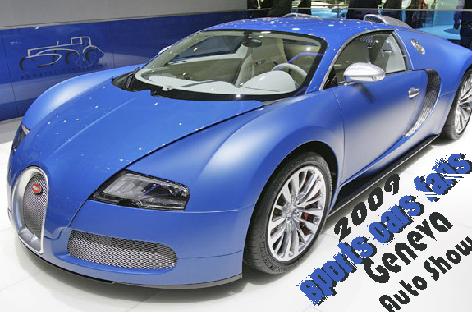
2009 Bugatti Veyron 16.4 Grand Sport
Bugatti, an authentic purveyor of fast moving machines, recently introduced their Veyron 16.4 Grand Sport featuring 1001 horsepower and speeds capable of 252 mph. As well, the French roadster holds a 0 to 62 mph time of 2.5 seconds, making it the world's fastest roadster Bugatti claims.
Review: 2010 Toyota Prius

When car buyers think of hybrids, the name that most often springs to mind is the Toyota Prius since it was the first really practical hybrid to come to market and has sold more than any other examples. Yes, of course, the original Honda Insight beat the Prius to market in the U.S. by about six months, but the tiny two-seater sold in equally tiny numbers and had limited appeal beyond hard core hyper milers.
In the coming weeks, Toyota dealers will start getting their first allotments of the all-new third-generation Prius, and while we got to spend a few hours with one on the west coast in March, we just spent a whole week with the new version of this iconic Toyota. While the efficiency of the Prius has never been in dispute, like many other cars from Brand T, its appeal as a driver's car has been, to say the least, limited. For its generation three model, Toyota has not given up on minimizing fuel consumption, but it has sought to make the Prius a bit more appealing on other levels. Read on to find out if the company has succeeded.
Many of the most avid fans of the Prius have been people who view cars as nothing more than a means of conveying occupants to a destination with the least amount of fuss. Minimal fuss often means minimal involvement, as well. That typically means finding the most direct route with the fewest number of directional changes. For those operators (we hesitate to call anyone who prefers to remain uninvolved in the process a driver), the first two generations of the Prius were utterly up to the task.
However, there is a fringe group of us who actually prefer roads with some twists and turns and enjoy the challenge of carrying momentum through corners without scrubbing off speed. Doing that effectively is aided by a car that transmits information about cornering forces back through the steering wheel and doesn't feel like it will scrape its door handles at moderate speeds. This is where the previous Prius was severely lacking, falling far short of other thrifty vehicles like Honda's new Insight and VW's Jetta TDI.
Somehow, Toyota has managed to muster its prodigious resources over the last several years to create a new model to address both of these extremist camps. Under the hood, the Prius now includes the latest iteration of Hybrid Synergy Drive, which operates more efficiently than ever. The basic architecture has not changed and includes an electronically variable transmission that acts as the power split device and a pair of electric motor/generators to provide drive torque and kinetic energy recovery.

The internal combustion engine remains a four-cylinder running on the Atkinson cycle to optimize its thermodynamic efficiency. However, the displacement has grown from the previous 1.5 liters to 1.8 liters, which has dual benefits. When the driver actually needs extra power in order to merge onto a freeway or complete a passing maneuver, the propulsive force is now readily available. The extra displacement means that it's available without unduly straining the engine so the impact on fuel consumption is actually reduced.
Inside, the new floating center console features a trio of buttons to help manage the powertrain behavior, one of which was previously available only in overseas markets. For the first time, U.S. Prius buyers now have an EV button available that sometimes allows the driver to force the car into electric drive mode. Since the Prius is designed as a parallel hybrid, the electric drive portion of the vehicle has limited capabilities (although far more than most current hybrids) to drive the vehicle. Therefore, the EV mode only allows the Prius to troll around silently at speeds below 25 mph. Of course, you can get kicked out of EV mode if the battery level is too low or the accelerator is applied with too much verve. With sufficient energy in the battery and an extremely light right foot, we were regularly able to go over a mile without the engine firing up.
To the right of the EV button is the ECO button. Like the similarly labeled switch in the new Insight, this one moderates the driver's commands before sending them to the various powertrain elements. The ECO mode essentially applies a slow filter to everything, smoothing responses to avoid the sort of sudden transient reactions that cause increased fuel consumption. During our time with the Prius, even these slower reactions proved to be sufficient for almost all day-to-day driving needs. For those times when you need just a bit more get up and go such as merging onto a crowded freeway, to the right of the ECO switch sits the Power button.
This one does the opposite of the ECO switch and speeds up throttle responses. While the 134 horsepower of the new Prius certainly doesn't give it the feel of a sports car, the 24 hp boost over the previous model means that it also never really feels inadequate. The biggest dynamic complaint about the old Prius, however, was the suspension and steering. Our own limited exposure with the prior model demonstrated excessive body lean and steering more in keeping with a video game that uses a non-force feedback steering wheel. The steering in the new model no longer feels so over-boosted and has at least a semblance of feedback about the cornering forces at work. It's not great but it no longer qualifies as scary, so that's a good thing.

As for the suspension, it actually has some roll control now, and the whole car feels tighter than ever. In fact, if anything, it might be a bit too tight in terms of damping. Small road inputs (on the rare occasion that you can find such a thing in Michigan) are transmitted a bit too directly to the driver's back side. While the ride and handling balance is certainly more geared to enthusiasts than before, it could still use a bit of tweaking. The Prius still understeers at the limit like most mainstream front-wheel-drive cars, but it never feels out of control.
The interior of the Prius now has a much more modern appearance than before with the high center console sweeping down from the dash between the front seats. The shift lever has the same basic functionality as before: a pull to the left and down engaging drive and left/up bringing on reverse. The shape of the console means all the controls fall readily to hand. Like the previous generation, Toyota has opted to use some unusual textures on the plastics to replace the usual faux leather graining. Since the simulated leather is typically exaggerated anyway and really doesn't fool anyone, that's a good thing in our books.


Much of the center console has a finish that looks something like brushed metal and is actually rather attractive. The leather seats in our level IV trim model have perforations in a sine wave pattern rather than the usual grid that gives it a bit more visual interest. The front seats themselves were reasonably comfortable during our driving time and never exhibited any unusual pressure points. The rear seat was also adequate for two passengers with plenty of leg room and improved head room thanks to the re-profiled roof-line. Behind the seats, the Prius has an ample 21 cubic feet of space available to carry all your stuff.
The Prius, of course, is all about fuel economy, and the new model has received some big numbers from the EPA. With ratings of 51 mpg city, 48 mpg highway and 50 mpg combined, one would expect it to be thrifty in the real world... and it is. During our week, the Prius returned a healthy 47 mpg with a driving style that was modest but could not be described as hyper-miling. It took comparatively little effort to get some very impressive numbers.
While a Prius can be purchased for as little as $21,000 for a stripped down model, our test example came to $30,150 including the leather interior, navigation system and solar roof panel. This pricing strategy will appeal to an even wider range of buyers than before, and the lower base price should attract a few cross shoppers from the less expensive though less frugal Honda Insight.
The new Prius is no longer just an appliance for commuting. It's almost fun to drive. Toyota just needs to apply some more of its Kaizen philosophy of continual improvement to the ride and handling and we can call it good.
[Source: Autoblog]
Honda S2000 successor independently rendered

Late yesterday, we showed you the handiwork of 3D rendering guru Lars Martensson (a.k.a. 'GRID'), who had applied his skills to a future vision of a new Subaru WRX STI. Today, we bring you the skilled Swede's take on what a next-generation Honda S2000 roadster might look like.
While this concept has no basis in reality (and rumors of an S200 successor have thus far amounted to nothing), as with the Subie, we find a lot of merit in what we see. Click on the gallery below to see if you don't agree.
[Source: 3DLuvr]
Volkswagen rolls out White Night Eos special edition

We know that Volkswagen's new special-edition Eos isn't named after a mythical cavalry figure on an ivory steed, but when we heard that the automaker's latest model has been dubbed White Night, we couldn't get Harry Ellis, the cloying stereotypical Eighties businessman from the original Die Hard movie out of our heads ("Hans... Boobie... I'm your White Knight."). Given that the terrorists in this seminal Bruce Willis film are equally stereotypically cold Germans, we're not sure that authorities at the Deutsche automaker will appreciate what came to mind for us, but we digress.
In any case, the Eos White Night is big on contrast, with a Candy White body offset by a Deep Black Pearlescent roof, side mirrors, and radiator grille. The look is an interesting one, as it uproots one of the inherent strengths that the folding hardtop convertible medium achieves best – the ability to have a matching body shell and roof, something that isn't as easily achieved with a conventional folding cloth top.
In addition to the contrasting black-and-white motif, the White Night also receives cherry-red LED taillights, 18-inch "Budapest" alloys, as well as nappa black leather with contrasting light seams, White Night sill panels, and Candy White trim strips. Every White Night comes equipped with automatic climate control, sports suspension (lowered 15 mm) and headed front seats.
The special edition Eos is available for order with any engine save the gasoline V6 – but at this time, it is a Europe only model that starts at a tidy €33,140 (over $46k USD!). 1980's White Nights Mercury Sable owners, eat your heart out.
[Source: Volkswagen]
Microsoft CEO gets 1,000,000th Ford with SYNC

Ford and SYNC have combined to be the peanut butter and jelly of automotive tech combo deals. 80% of the vehicles Ford sells now has the infotainment system, helping the Blue Oval and Microsoft reach 1 million sales of the infotainment system in less than two years.
Since Microsoft created the SYNC software, it has just as much reason to celebrate its success as Ford. Microsoft CEO and Detroit native Steve Ballmer decided the best way to celebrate was to get his hands on SYNC vehicle number 1 million; a 2010 Ford Fusion Hybrid. The 41 mpg sedan was delivered by none other than Ford CEO Alan Mulally.
Mulally reiterated his support of SYNC, saying that Ford would "continue to innovate and expand the capability of SYNC by integrating even more new technologies that fit our customers' lifestyles." SYNC already interfaces with navigation and entertainment systems, and 911 Assist helps call emergency services in the event of an accident. SYNC will receive further updates this summer when it gains the ability to deliver traffic, directions and information services.
[Source: Ford]
Mitsubishi Evo X FQ400 in action
Proving the popularity of Mitsubishi’s rally bred Lancer Evolution X FQ-400, despite the fact that the car was officially launched only a day ago, and it is already being seen in action. Check out the 403 HP turbocharged all wheel drive rocket as it receives its first impression.
First Drive: 2010 Lexus HS 250h

Just because The Cold War is over doesn't mean that all cold wars have come to an end. Two protagonists in the auto industry – once again, East vs. West – are currently embroiled in an in-car safety and technology arms race that is beginning to look more like NASA vs. Roskosmos than a battle between luxury sedans. The latest master weapon comes from Lexus in the form of its HS 250h hybrid, claimed to be not only the world's first hybrid-only luxury sedan, but also the most fuel-friendly luxury vehicle extant. If Lexus has it, they put it on this car. Our question was: Would we want to put one in our driveway?
Frugal hybrids are here, sports car hybrids are here, and luxury hybrids are dipping wheels in the waters. This car marks the first luxury-only hybrid to make its acquaintance with the public. During the launch, Lexus was at pains to make sure we did not confuse this car with the Prius, informing us that the HS' closest sibling is the Euro-market Toyota Avensis. Fitting in between the IS and ES and GS in brand placement, the HS 250h "was developed as an answer to customers looking for an environmentally conscious premium vehicle."
What about the GS 450h and LS 600h? In addition to the HS 250h being hybrid-only, it's the first Lexus hybrid tuned with the primary goal of delivering superior economy. While Lexus' GS and LS hybrids are meant to provide power above their weight class with the same fuel efficiency, the HS is meant to provide economy with a decent dollop of power.
It does so via a DOHC 2.4-liter Atkinson-cycle four-cylinder engine with variable valve timing. The engine alone puts out 147 horsepower, but add some juice from the 245-volt battery behind the rear seats and the system is good for 187 hp. Torque comes to 138 lb-ft, and you can have it all on regular 87-octane gas. The car isn't just frugal on gas, it's equally parsimonious with emissions: 70% fewer smog-forming emissions find their way out of the tailpipe compared to conventional vehicles, and evaporative emissions are close to zero.
The mpg tally? According to Lexus, you'll be the proud owner of 35 city, 33 highway, 34 combined. That easily beats other car in the entry luxury segment, the Mercedes-Benz C-Class, BMW 3 Series and Audi A4. It even beats the 1 Series. Heck, it even beats a Mini Cooper (except for the diesel, which you can't get here yet). Mind you, the HS isn't really competition for those cars, which all emphasize sporting splendor as opposed to frugal hybrid luxury.

A shift-by-wire system operating through a continuously variable transmission (CVT) gets the grunt seamlessly to the ground. The console-mounted shifter engages Reverse, Neutral, Drive, and a "B" setting that actuates an engine braking feature when going downhill, which helps use gravity to refill the battery and keep your feet off the brakes. Oddly, Park is a button next to the shifter – if you don't use the button, the car will remain in neutral when you get out. As the gentleman from Lexus University explained, "If you don't press the button, the car's going to leave."
Let's talk technology for a moment, shall we? Here are some of the systems on the HS 250h:
- A Pre-Collision System that you get when you check the Dynamic Radar Cruise Control option. If your HS thinks you're going to hit someone, it will ring the warning bells and add brake pressure if it doesn't detect you're pressing the brake hard enough. The driver monitor will also be working to make sure you're still at work behind the wheel. If you do happen to have a boo-boo, you'll be protected by ten airbags.
- A heads-up-display that projects not only speed, but nearly any input you give the car, including audio system commands and navigation instructions. The steering wheel buttons are touch sensitive, so that when you rest your finger on one, it appears dimly in the HUD display, and is illuminated if you actually press it. You also get Pre-Collision and Dynamic Radar Cruise Control warnings shown to you in the HUD.
- The wide-view front monitor is the same feature you get on a Rolls-Royce Phantom. If, for some reason, you can't see what you're about to nudge the HS's four-foot nose into, turn on the front monitor and you'll get a 190-degree view from the grille-mounted camera.
- An infrared-cut, acoustic glass windshield that reduces IR waves by 30%, and side glass with a water-repellent coating for better wet weather visibility and defrosting.
- Intelligent high-beams use a camera in front of the rear view mirror and automatically switch between high and low headlight levels. They can also shorten the distance of the beam depending on whether traffic is approaching you or you are pulling up behind someone.
- Lane Keep Assist helps you stay in your lane in two ways. When the lane departure warning system can clearly make out lane markings, the steering wheel will vibrate and if you stray, the car will apply an ever-so-subtle amount of steering input to get you back in the lane. The second feature is essentially the car keeping itself in the center of the lane. Once the HS 250 knows where the lane markers are, it will gently provide steering inputs on its own to keep the car going right down the middle. Not that you would – but you can take your hands off the wheel and watch the car keep itself between the lines. Of course, this feature doesn't work on switchbacks, and it's not an auto pilot, but it does appear to be the way things are going these days.
- Casual voice command capability (as on the IS convertible) that let you blurt out "Make it cooler" and "I need a gas station" instead of dictating your way in clipped tones through menus.


Now to the technological main event: whereas GM has Onstar and Mercedes has Tele-Aid, the HS 250h introduces Lexus Enform with Safety Connect. This is actually two different subscription services: Safety Connect will be available on all cars; Lexus Enform will be available on those with navigation.
Safety Connect notifies a command center if you've been in an accident, alerts tracking authorities to the vehicle's location, can make calls for emergency assistance, and adds GPS location data when you make calls to Lexus' roadside assistance program.
Lexus Enform can be thrown on top of that services and has two offerings. Destination Assist is like calling 411 for navigation – command center agents will help you find what you're looking for by name or type of business, at which point it will send the directions to the navigation system.


eDestination lets you go on the Lexus site at your home computer (or any other computer or iPhone – no Blackberry capability yet) and save up to 200 destinations in 20 different personalized folders. You can even annotate each destination with your own comments. Then you can send that entire packet to the car and download them all into the navigation system. Purchase an HS and you'll get the first year of Lexus Enform and Safety Connect for free.
If you just can't get enough of Lexus, there's Lexus Insider, a free opt-in service. Go to the Lexus Insider screen and you'll find audio messages from the company that can provide anything from useful vehicle tips to event information and owners' benefits.
The last sprinkle on the gizmo cake is XM Sports and Stocks for cars with navigation and an XM subscription. With XM Sports you can program schedules and results for five teams from the NBA, NFL, MLB, and NHL. XM Stocks keeps track of ten companies in your portfolio and can read the day's activity to you.

The car's trimmings haven't been left out of the technofest, either. Bioplastics derived from kenaf make up 30% of the hybrid's interior and luggage area – in upholstery, foam, and injection-molded and board parts – with the result that the car is 85% recyclable. Elsewhere, leather abounds in the seating areas and there's a sheaf of rawhide over the dash cluster and lining the center console.
And that brings us, at long last, to the most quotidian aspect of the car: sitting in it. The HS is comfy and roomy, and the truncated center console keeps everything wide open inside. The thin, shaped front seatbacks leave plenty of room in back for real, human-sized men, so it's a good thing that the trunk is roomy, too. At 12.1 cubic feet, it can swallow more than any other Lexus hybrid (beating the LS 600h by 0.5 cubic feet), which means four and their golf clubs should go nicely. Any seat in the house is a nice one to have.


We have spent so long discussing the bounty of what's inside the car because we're still not taken with what's outside the car. The HS 250h is a lot of things and has a lot of things, but we would not put exceptional looks on that list. It has a Cd of 0.27, making it as slippery as it is bland. Of course, we understand why it looks like it does... but that doesn't change the fact that, well, it looks like it does. At one point, we pulled up next to a Toyota Corolla S, the one with the aero bits, and the resemblance was uncomfortable. We wouldn't have minded a little drop in gas mileage for a bit more bite in the HS' design.

19th-century French author Guy de Maupassant said he ate in the restaurant at the base of the Eiffel Tower because that was the one place where he didn't have to see the tower. Once inside and moving in the HS, you won't think about the way it looks. The driving experience is pretty close to awesome, this being a hybrid that'll seat four grown men with luggage and get you at least 34 mpg combined, probably more with a conservative right foot.
Turn the car on and you probably won't hear a thing, which isn't unusual for a Lexus. But in this case, there might actually be nothing happening – if the car doesn't need anything other than electrical power, even though you're about to pull away, it will remain silent. The only indication that all systems are go is a green "Ready" light in the gauge cluster. The car can operate at up to 20 mph on electric power alone for about five minutes, so if you're putting through a severely speed restricted area, you can do it within a cloak of aural invisibility (pedestrians, beware!).
When the engine finally does come on, it's the standard Lexus protocol of quiet. When urging the HS on, you can hear its exertions, but it's nothing out of place. Lexus spent a lot of time balancing the car's weight and shape against the sound profile that passengers would experience inside, and the results speak for themselves – or rather, they don't.


There are four drive modes when you get up to speed: EV, Eco, Normal, and Power. If you've bought a hybrid and you want a Power mode, perhaps you should buy the GS hybrid, but the setting does give you slightly increased throttle response. Normal mode was actually just fine for us as far as power was concerned. The car gets up to 60 in 8.4 seconds, which strikes us as plenty of pace for a model like this.
The HS never feels slow, not even in Eco mode, which was our favorite and coincidentally the slowest driving mode possible. Eco mode slightly retards the throttle response so that not only do you get the best possible gas mileage, but you begin to learn how much throttle you should give the car in order to achieve it. It doesn't rob you of your ability to give the car a whipping – if you mash the throttle, the car will understand that you want everything it's got. In Eco mode, the thriftiest Lex will build its way up to 35 mph much more fuel efficiently. This will usually result in some tarmac space growing between you and the folks stabbing at their accelerators, but it's not nearly as intrusive as it might sound. And we saved the life of a baby whale every time we used it.


You can also select EV-only mode, provided you know you're going to be going under 20 mph and the battery is more than 50% charged.
But what about pushing in and out of corners? After driving it in the hills surrounding Los Angeles, the handling gets a thumbs-up from us. The HS uses MacPherson struts up front (with all of its parts completely different to the Prius) and a double wishbone rear suspension. The steering rack is not mounted on rubber bushings to keep the line of feedback undulled, and the electric power steering is speed sensitive. If you get the Touring Package, the suspension is tuned for even sportier handling. And if the truth be known, the package added up to a car that we thought handled better than the rear-drive IS Convertible. In fact, we drove them back-to-back just to make sure. We're not saying it could outperform the IS 350C, but in terms of meeting our expectations for cornering, steering, and feedback – sheer handling enjoyment– the HS wins.

We have no problem recommending the Lexus HS 250h because it certainly gets two out of three things exactly right: the cabin experience sets a fine mark for what a luxury pure hybrid can be and the driving is enjoyable. Our V8-loving enthusiast hearts never really felt cheated when tooling around in the car – in fact, we liked it. It's only the styling that gives us pause long enough to say that we will let other beholders judge that beauty for themselves.
If you're looking for a hybrid-only luxury car, this is the only place you can go for now. If you're looking at any entry-level luxury car, then the Lexus HS 250h is a fine place to start comparing the present choices with one possible future.
[Source: Autoblog]
Officially Official: Mitsubishi Evolution X FQ400

The Mitsubishi Evolution X FQ400 has been rumored for months and its finally ready for its close-up before sales begin in the UK this June.
In keeping with its NSFW nomenclature, the FQ400 is putting out 403 hp at 6,500 rpm, with peak torque – 387 lb-ft of the stuff – arriving at an oh-so-usable 3,500 rpm. The extra grunt is thanks to a set of high-flow fuel injectors and a new turbo with low friction bearings, an uprated thrust bearing and high temperature turbine that Mitsubishi insists will keep turbo lag at bay. A new intercooler helps bring down the charge, a new ECU works its binary magic and a three-inch stainless steel exhaust exits at the center of the restyled bumper, complete with carbon fiber diffuser.
The exterior benefits from a carbon fiber front fascia, side skirts and rear wing, along with the Sonic the Hedgehog "Vortex Generator" mounted on the roof. The ride height has been dropped by 30 mm with a revised set of Bilstein dampers and Eibach springs, each hidden from view by front Alcon brakes and 18-inch, nine-spoke wheels shod in super sticky Toyo Proxes R1R rubber.
In addition to all go-fast bits, the FQ400 is fully loaded with Bluetooth connectivity, 30-gig hard drive, sat-nav and privacy glass, along with a carbon fiber gear knob and matching handbrake handle.
Mitsubishi claims the FQ400 will hit 62 mph in 3.8 seconds, impressive considering the cost of entry across the pond is a cool £49,999.
Clarkson on the Audi Q7 V12 TDI

Last year, Audi announced the most insane version of its Q7 SUV yet in the form of the Q7 V12 TDI. The V12 is an all-new diesel engine that, for now at least, only has a home in the Q7, but at some future date, it may appear in some other VW group products (think: Bentley). The V12 produces 500 hp and a ridiculous 758 lb-ft of torque, enough to get the 2.5-ton SUV to 62 mph in 5.5 seconds.
While Audi has said it has no plans to bring the V12 Q7 TDI to America, Top Gear mouthpiece Jeremy Clarkson got to try one out and came away with mixed feelings. Like many people, Clarkson is no fan of the Q7's looks and thinks the whole premise of the vehicle is ridiculous. On the other hand, brute force does have a way of twisting people's opinions and this big Audi proves to be no exception.
Generally, any sporting motorcycle can leave a four-wheeled conveyance in the dust. Apparently, this Q7 is the exception, as Clarkson was supposedly able to keep pace with Top Gear co-host Richard Hammond on a Suzuki Hayabusa. Even with all this power, the V12 TDI is still rated at 21 mpg (U.S.) on the EU combined cycle. In Clarkson's own words, "Mad. Bonkers. Stupid. [...] It's crap. But it's brilliant too." Too bad they canceled the R8 with this engine.
[Source: The Times of London]
Despite new Mercedes-Benz E-Class coupe, rumors of a new CLK persist

According to a puzzling report from L'Automobile Magazine in France, Mercedes-Benz plans to launch a new CLK coupe even though that model would undoubtedly compete with the German automaker's own just-released E-Class coupe. Ostensibly, there's a gap in the automaker's lineup that could be filled by a coupe that's slightly smaller and a bit less expensive than the new E-Class, but the rumor continues to confuse by suggesting that the revived CLK would still be longer than its predecessor by five centimeters.
Styling would reportedly draw from the design of the current C-Class sedan, including the oversized front grille with Three-Pointed-Star emblem, rising character lines along the sides and chiseled head- and tail- lamps. In other words, it would look suspiciously like a downsized E-Class coupe. Powering the new CLK would be a range of gasoline and diesel engines, all featuring direct injection and stop/start technology and many force fed by a turbocharger.
Considering how much this supposed CLK would overlap the new E-Class coupe, we're happily going to assume there's not much truth to these rumors. If we're wrong, you may just see the new CLK in dealerships sometime in 2011.
[Source: L'Automobile Magazine (translated) via Top Speed]
Twin-turbo Skyline-powered 2105 shows off a Lada intercooler

Take a close look at the car in these photos. What at first glance appears to be a '70s race car done up for SEMA is actually S. Kartuzoff's Lada 2105 Gladkov Edition. The car has been dubbed "Adrenalin," and as the description says, "It is the Russian car!" with motive power coming from a Nissan Skyline engine that has been boosted by a pair of Garrett turbos. The before-and-after pics show how much work went into creating this oddly classic and simultaneously modern vehicle.
Most of our crew aren't digging the scissor doors, but the intercooler-as-grille idea, well, that's just inspired. And the twin-turbo powertrain? Boffo. Makes us think of all of those glorious IMSA TU cars from the '70s. Cars like the Alfa GTV, Fiat 124, BMW 2002, Datsun 510, and Mazda RX-2 and -3. Check out the small gallery of pics grabbed from the source below, but we urge you to click through for more images of the incredible and unique build.
[Source: CarDomain]
Officially Official: BMW drops the details on its 2010 5 Series Gran Turismo

Despite the departure of controversial lead designer Chris Bangle, BMW is showing no signs of returning to the "One sausage, three-sizes" styling brief that it once adhered to. The latest proof of this is the announcement of the production 5 Series Gran Turismo, which, as expected, looks little changed from the concept that set tongues wagging in Geneva, save for a few details like smaller wheels, more conventional interior fabrics and real-world-sized side mirrors.
The genre-blurring 5 Series GT is, in the words of BMW, meant to combine "the characteristic features of a prestige saloon, a modern, highly versatile Sports Activity Vehicle, and a classic Gran Turismo" – outwardly, at least, we'd say that they've succeeded in meeting that goal, although the final judgment on whether this amalgam of characteristics is a even a direction worth pursuing will ultimately be made by consumers.
In the meantime, we can focus not only on the five-door hatchback's design, but also its internals, as BMW has released specifications and pricing for its European market models.
In the main, BMW has disclosed that Europe's gasoline model range will be composed of the 306 horsepower, 3.0-liter 535i Gran Turismo (a derivative of the fabulous dual-turbo inline-six seen in the engine bays of the 1, 3, and 5 Series) and the 550i Gran Turismo, which relies on a stonking dual-turbo 4.4-liter V8 good for 407 horsepower, an engine that promises to be just the thing when you're running late for your squash court appointment. Finally, there's the 530d Gran Turismo, which offers a 3.0-liter, 245 horsepower I6 diesel powerplant and a tidy C02 rating of 173 grams per kilometer. Regardless of which engine the buyer chooses, the sole gearbox offering will be the eight-speed automatic gearbox borrowed from the 760i luxury sedan. The cog-happy unit should not only help with overall fuel economy, but it makes any model in the range a sprightly performer, with BMW quoting 0-62 mph times of 6.3 seconds for the 535i GT, 5.5 seconds for the 550i GT, and a thoroughly respectable 6.9 seconds for the 530d GT (which also achieves 43.5 miles per imperial gallon, or around 36 mpg US).
It isn't yet clear what models will come to the States, but we're hearing that the 550i will be the first to make the journey, and it is likely to arrive carrying a price tag of around $70,000, which would represent around a $10,000 premium over the less-powerful 550i sedan.
[Source: BMW]
Honda set to release Acura coupe in 2010?

Rumor on two continents – Germany in Auto Motor und Sport and Japan in Holiday – has it that Acura is developing a sleek four-door to join the lexicologically questionable segment known as "four-door coupes." The various translations equate to a car built on the forthcoming ZDX crossover's architecture, with reports suggesting that the new model will slot in between the TSX and the TL. Longer than the TSX by a few inches, the coupe is expected to also be wider, lower, and have a longer wheelbase than the small sedan.
Although one of the outlets mentioned a V8 and a FR layout, the consensus on a proposed engine is the 3.7-liter V6 paired up with Acura's SH-AWD and Motion Adaptive EPS. When might one expect to see this latter-day CL, if such a thing really does exist? Next year's Detroit Auto Show, with U.S. sales perhaps at the end of 2010.
[Source: Temple of VTEC]
London mayor nearly killed on cycle while doing recon for new city bike routes
we regularly promote the idea of parking your car and using an alternative form of transportation whenever it's practical. For those living in urban environments, cycling is a common and often faster approach compared to driving, and congested cities the world over have been working to make pedaling more viable in recent years. One of those cities is London, England, which has been battling intense traffic through such means as a particularly contentious congestion charge.
Unfortunately for those that opt for pedal power, a great many cars and trucks will remain on most roads for the foreseeable future. That means cycling may be more environmentally friendly, but it's also very risky. London mayor Boris Johnson learned this the hard way this week while ironically scoping out locations for new bike lanes in the British capital. A truck that looks like it might have been going too fast down a narrow street very nearly triggered a fatal accident with the mayor and the British transport minister. You can check out the entire incident as recorded by one of the thousands of closed-circuit video cameras that line London's streets after the jump. Hat tip to John R.
[Source: The Guardian]
Review: 2009 Land Rover LR2 HSE

Land Rovers have always gone their own way – often literally. While off-roading demands a low center of gravity and muddy trails would seem to warrant hose-out interiors and body-on-frame-construction, the British automaker has long contented itself building tippy-looking unibody boxes with tall greenhouses and opulent cabins – the anti-Humvee, as it were. Further, in recent iterations, they've packed their products with immense electronic systems, air suspensions, dial-a-topography Terrain Response controller, and so on... the very sort of complexity that ought to be enough to send English sports car enthusiasts running back to their therapists' offices.
And yet, the formula has always worked – vehicles like the Range Rover and Discovery (now LR3) have somehow managed to earn both Kalahari-traversing credentials and valet stand privileges. Other companies have attempted the leather-lined off-roader thing before (Lamborghini, Lexus, Hummer, Porsche, and LaForza come to mind), but while some have added the trappings of luxury to their SUVs, exactly no one has been as successful in marrying their vehicles to the notion of aristocracy – the sort of "Lord and Master of All That I Survey" quality that has remained Solihull's historic preserve. In short, Land Rovers have always been a gloriously and uniquely British contradiction on wheels – a fact that goes some way toward explaining why your author remains more than a little conflicted when it comes to this LR2.
A Contrarian Spirit
Admittedly, with more and more buyers flocking to the softroader pool, it made a good degree of sense for Land Rover to take a second crack at the market – even after the lackluster Freelander failed to find Stateside homes. Still, despite the solid concept of bringing a dose of the company's values, styling and heritage to bear on the segment, there's no getting around that the genre's developing conventions are at odds with traditional Land Rover tenets – most of which the LR2 doggedly seeks to uphold. Allow us to explain.
These days, more and more such vehicles are coming to market with a lower ride height, minimal off-road ability, and wider, more voluptuous bodies that have the occupants sit lower in the chassis to subconsciously reinforce feelings of security and safety. Perhaps predictably, the LR2 hasn't even waited for the crossover handbook's ink to dry before throwing it out the window and into the mud.
On the styling front, our tester deployed a raft of premium touches – complex-element bi-Xenon adaptive headlamps (part of the $1,050 Lighting Package), clamshell hood, side vents, massive 19-inch alloys (in a new pattern for 2009), and in the case of our tester, impressively lustrous Rimini Red paint. Ultimately, however, the LR2's rectilinear stance and slab sides strike at least some of us as gussied-up paint-by-numbers SUV bodyshell – not a unique form. This author would argue that the LR2 looks smallish and a bit like a lux variant of a more prosaic vehicle (say, Ford Escape?), and its jutting Leno-like mandible of a front bumper does it no favors. Somehow, the LR2 ultimately fails to cash-in on the Sub-Zero minimalist aesthetic advanced by the Green Oval's other models. However, it does offer more traditionally rugged, upright SUV looks than its increasingly wagon-like foes – and that strikes us as a valuable (if niche) position worth saving.


Despite its somewhat gangly appearance, the LR2 is actually wider than its chief competitors (think: BMW X3, Audi Q5, Mercedes-Benz GLK, and Volvo XC60), yet it is also taller, has the shortest overall length and employs a markedly shorter wheelbase – all of which conspire to give it a comparatively tippy-toes look. This sensation is reinforced inside by the vehicle's dining room chair seating and low beltline. That "on, not in" feeling is pure Land Rover, though, and it's done for a reason – the formal driving position allows for a markedly better view of the vehicle's corners and immediate surroundings than any of its competitors – an important factor when tiptoeing around boulders and threading down narrow two-tracks. Sadly, unlike many Range Rover and Discovery owners we know, we have trouble envisioning the average LR2 driver subjecting their vehicle to much more than the occasional curb hop or gravel road, so this strategy may be of limited merit, – even if it is necessary to stay on [brand] message.
Bright, But Boring
With the exception of the annoyingly contrived starting process (insert oversized fob into hidden slot below gauge binnacle, push in until it clicks, then reach up to push the separate engine start/stop button), just about everything in the interior is on the up-and-up ergonomically, with large buttons, simple layouts, and good switchgear feel. Better yet, the low, elbow-on-the-sills beltline and matching décolleté instrument panel combine with the standard twin-element sunroof to flood the interior with sunlight, lending it an open and airy sensation. Despite the abbreviated overall length and the titchy wheelbase, there's plenty of room inside, again, thanks to the upright seating. And yet... the LR2's interior has a bit too much starch in its collar for our tastes.

The dashboard itself is a style-free zone, some plastics are substandard, and worse still, the center stack is badly dated, with a too-small yestertech navigation touchscreen (part of the $3,500 Technology Package) set distractingly low in the dash, to say nothing of the separate 320-watt Alpine audio controls that lurk even further down (and whose old-fashioned display is prone to washing out in the aforementioned floods of sunlight). Still, points must be awarded for the beautiful and aromatic almond leather/nutmeg carpet combination (also new for 2009), easy-to-read instruments, and heated windscreen (part of the $700 Cold Climate Package). And although we chide Land Rover for its aging in-dash technologies, we're quite pleased that they have yet to adopt an overly complex all-in-one GUI controller like their rivals at Audi, BMW and Benz.
Road Scholar? Well...
Despite casting the smallest shadow among its peers, the unibody LR2 is actually the heftiest customer of the compact premium class, toting around some 4,250 pounds (competitors generally ring up in the 4,000-4,200 pound range), a number that doesn't bode well for the 3.2-liter inline-six, which only brings 230 horsepower (@ 6,300 rpm) to the party. That's substantially fewer ponies than the LR2's aforementioned adversaries, most of which corral upwards of 260 hp.

At least the Volvo-sourced 24-valver's 234 pound-feet of torque (@ 3200 rpm) is in the hunt, albeit a bit higher up in the revband, though we wish the kickdowns from the Aisin-Warner six-speed transmissions happened a bit more smoothly and quickly. The latter's sport mode helps somewhat, but blistering progress just isn't on the menu – our rear-end accelerometers peg 60 mph as well north of 9 seconds (LR claims 8.4 seconds, but we're not buying), while many of the LR2's tarmac-oriented classmates will do the deed in under 7 clicks (and most will make more attractive noises while doing so). Because drivers will often find themselves dipping deep into the 3.2's meager reserves, fuel economy fails to excite as well, with EPA figures of 15 mpg city and 22 highway (17 mpg combined), though we could only muster 15.2 per gallon of premium fuel in mostly highway driving.
Speaking of highway driving, you can expect lots of minor course-corrections on the superslab, especially when it's windy. The quick steering rack (2.6-turns lock-to-lock) feels at odds with the rest of the LR2's abilities, so as a consequence, it feels a bit wayward and unsettled – a sensation that's magnified by the tallish seating position. There's a good amount of pitch and yaw from the long-travel suspension as well, although confidence-inspiring, linear braking performance help assuage any dynamic fears.
The Dirty Iconoclast's Payoff
But hang on – things can't be all bad, can they? Hardly. While we didn't take our HSE off-roading during its week with us in Michigan, we must confess to having prior knowledge of the LR2's extensive off-road capabilities, having tested the model's pluck at Biltmore Estate's Land Rover Experience last year in Asheville, North Carolina. After traversing a muddy and slick forest and field course that included log bridges, side tilts, and teeth-gnashing, root strewn descents in the LR3 and big daddy Range Rover, we went back and did much of the course over again in the LR2, finding that it was more than up to the task.
In fact, things were much more exciting while off-roading in the baby Brit, largely because one didn't feel as invincible. Lacking a proper low-range, momentum conservation became of paramount concern, making judicious two-footed juggling of the brake and throttle pedals increasingly important. With 8.3 inches of ground clearance (markedly less than the other air-suspended LRs, yet greater than any of its competitors), we had to pay close attention, but the LR2's nippy best-in-class turning circle helped us negotiate narrow trails and tight tree stands that would hang-up larger vehicles, and the vehicle's unusually erect driving position and excellent sightlines paid big dividends here, as did the long-travel suspension, which helped minimize head-toss and general skittishness that firmer road-oriented setups generally bring. Even the tight wheelbase helps with breakover angle.

With its Terrain Response Control (Driver-selectable modes: General/Snow/Sand/Mud & Ruts) and Hill Descent Control keeping an eye on everything from the four-wheel ventilated disc brakes (12.5-inch units in front, 12.0-inch out back) to our throttle position and the Haldex all-wheel drive system's machinations, our LR2 scrambled up, over, and down obstacles that would've left its contemporaries quite literally gutted. Along the way, we heard lots of skid-plate scraping and some distressingly loud noises emanating from the HDC, but the LR2 prevailed unscathed in enough tough situations that its rivals look terrified of drizzle by comparison. If you live in a particularly hostile climate, this performance alone may be all the justification you need to pay a visit your local Land Rover Center.
A Question of Value(s)
To be fair, the LR2 isn't exactly a new vehicle. While it has only been on the U.S. market since 2007, it went on sale earlier in Europe, and the GLK, Q5, are all more recent efforts, not to mention larger, more overtly road-focused outliers like the Lexus RX350 and Infiniti EX35. Critically, at a base price of $36,100 ($35,375 MSRP + $775 in destination charges), the LR2 undercuts many of its rivals, particularly when one visits the frankly extortionate option lists on some of its German rivals. Our full-house tester was $41,400 all-in, and a comparable X3 would run upwards of $48,000, although the Bimmer's superior maintenance program and resale value blunt the value disparity.
For its part, Land Rover has just unveiled its massively updated 2010 Range Rover, Range Rover Sport, and LR3 lines, all models that have, to one extent or another, historically shared some of the LR2's deficiencies (elderly interiors, underwhelming power). While we have yet to drive these new models, what we have seen suggests that Land Rover is serious about rectifying the bald spots in their product line. We hope that the LR2 is afforded the same treatment – and soon.
But enough with the conditionalizing. In the end, the LR2 is a willfully different product, and it is likely to stay that way, if only because it must. In order to stay true to Land Rover's core values and brand essence, the LR2 had to prioritize off-road ability, segment expectations be damned. Call our tester a tenuous balancing act, call it inherently conflicted, call it a singularly unique constellation of skills, call it what you will – the ramifications of this vehicle's design brief, both positive and negative, are felt in virtually every aspect of its being. Whether Land Rover's engineers have made the right decisions in shaping the LR2 is a question of the buyer's priorities. But one thing is for sure: If we ever had any doubts that the LR2 is a proper Range Rover, well, those days are gone.
[Source: Autoblog]